
Therapy TrAIner
AI-powered simulation training for tomorrow’s therapists
Therapy TrAIner elevates classroom instruction by allowing students to practice and receive AI-powered feedback on fundamental skills, building confidence and competency in a risk-free environment.
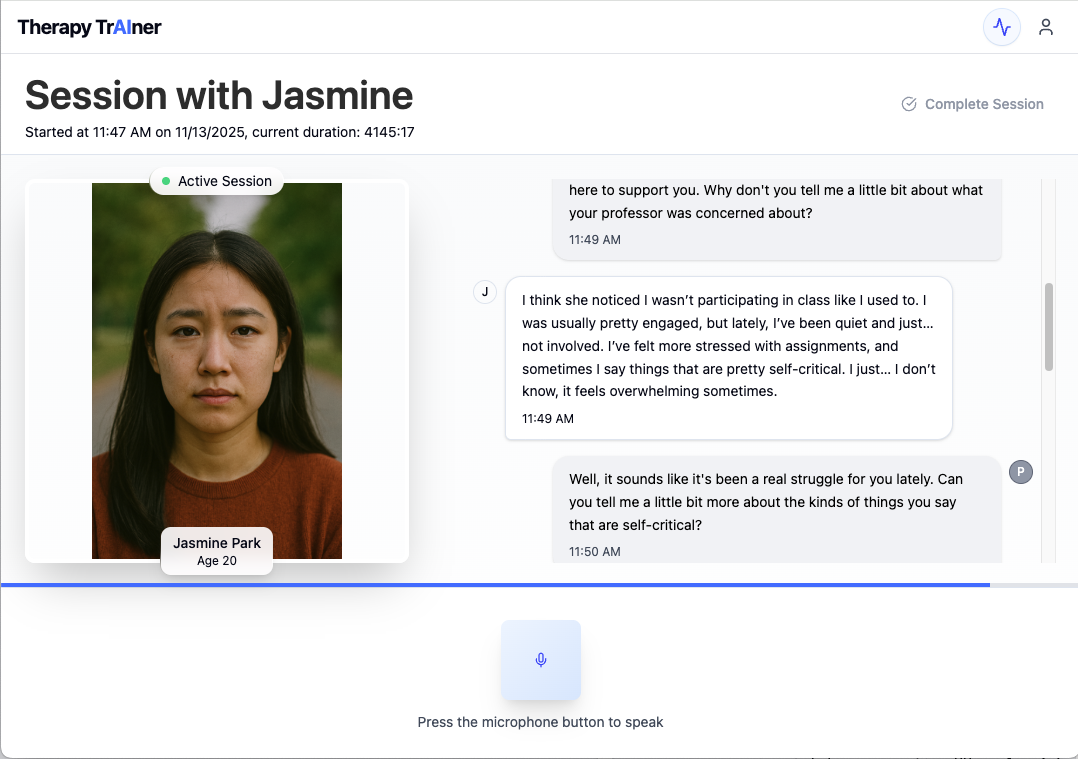
The Value of Therapy TrAIner
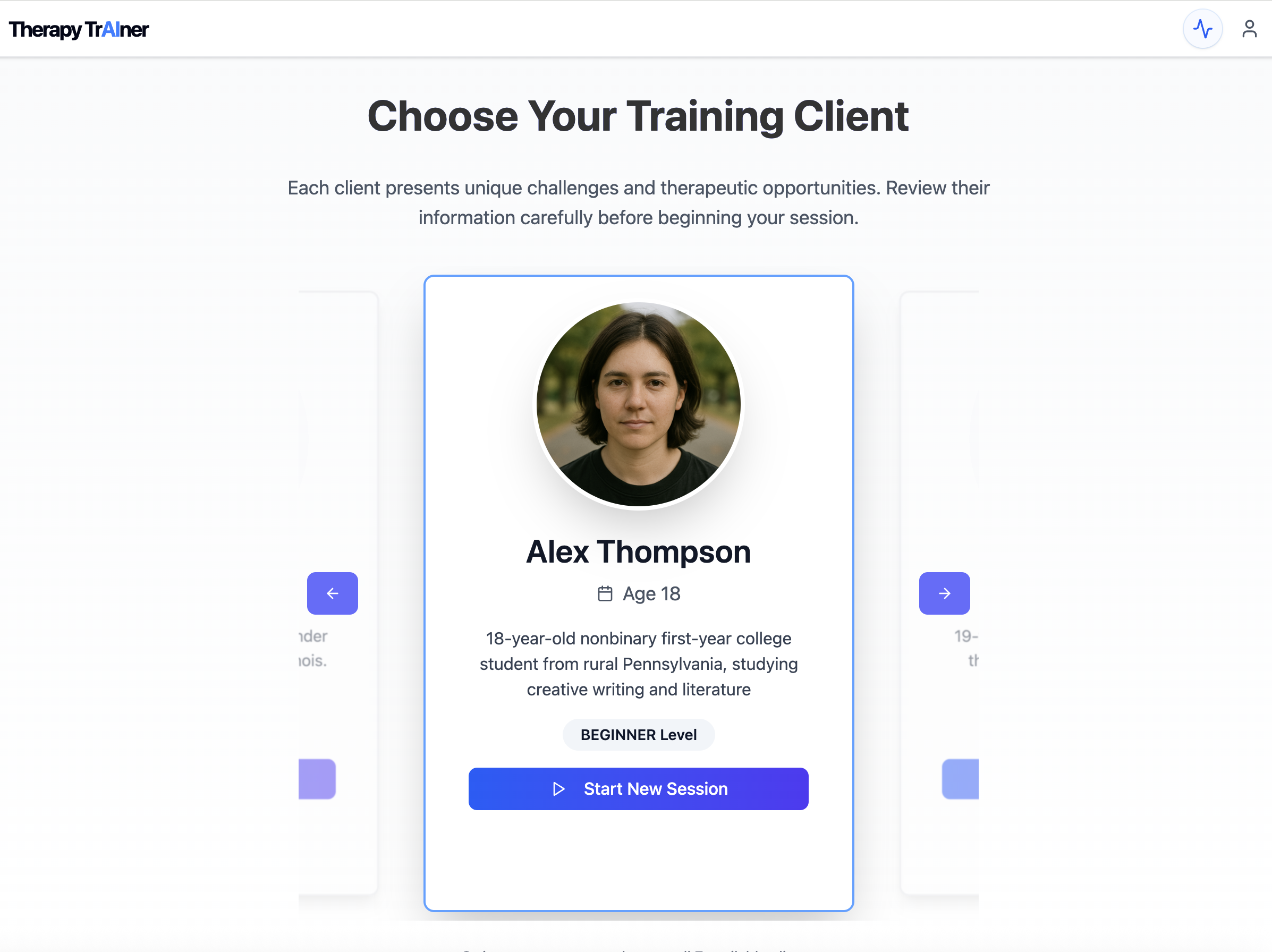
Realistic AI-Generated Clients
Therapy TrAIner gives users access to lifelike, client avatars. Each client reflects real-world diversity in identity, background, presenting concerns, and risk level.
Partner institutions can request new clients tailored to their training needs, including:
Specific diagnoses or symptom profiles
Cultural and demographic backgrounds
Suicide-risk scenarios at varying levels
Trauma, substance use, or academic stress presentations
Specialized settings such as community clinics, substance abuse treatment centers or schools and universities
Every client is rooted in clinically accurate narratives created by experienced psychologists, ensuring sessions feel authentic and relevant to actual practice.
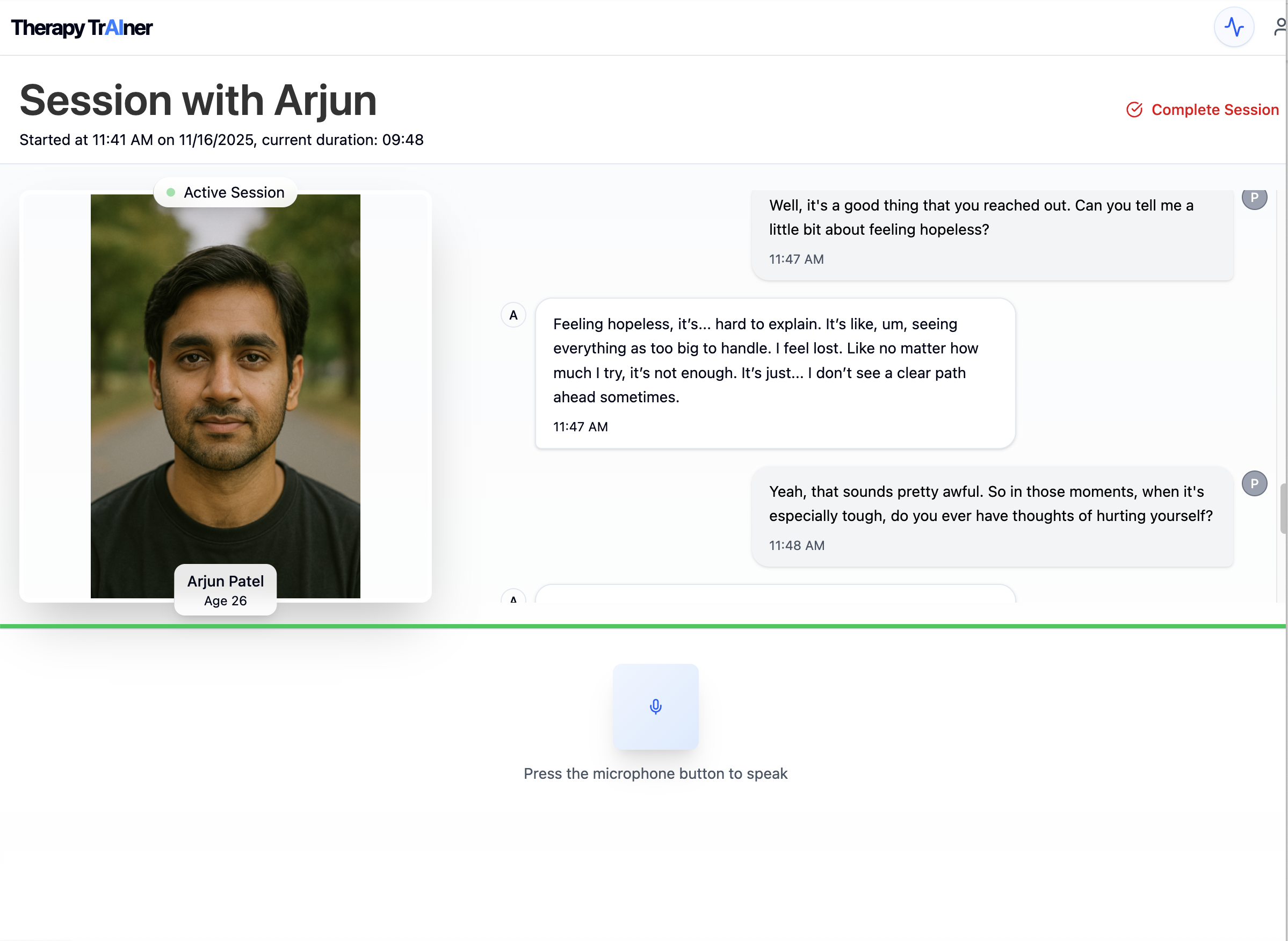
True-to-Life Dialogue
Our AI clients respond the way real clients do: nuanced, emotionally grounded, and shaped by decades of clinical experience.
Students practice:
Building rapport and trust
Exploring presenting problems and history
Asking sensitive questions thoughtfully
Exploring client culture and identities
Conducting structured assessments like suicide risk evaluations
Sessions unfold dynamically, so no two conversations are identical. The experience mirrors what a clinician encounters when sitting down with a client for the first time, giving trainees a safe, immersive environment to build confidence and skills before they work with actual people.
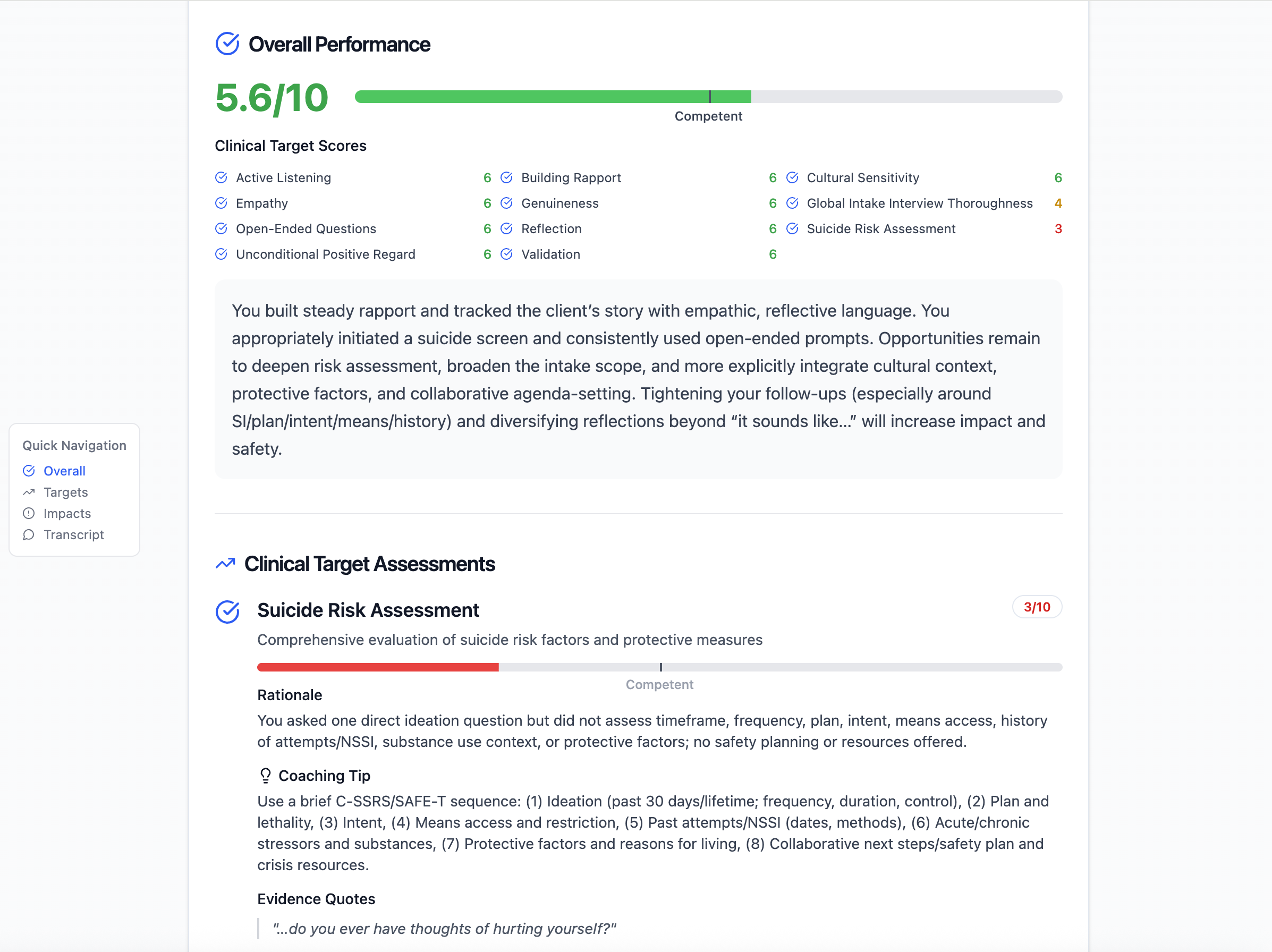
Personalized Performance Feedback
After each session, trainees receive detailed, individualized feedback based on best practices.
Reports include:
Skill-by-skill analysis across empathy, rapport-building, question quality, reflective listening, and safety assessment
Identification of missed opportunities
Specific examples pulled from the trainee’s own dialogue
Concrete recommendations for improvement
Flags for clinical risk factors mentioned by the client
These reports help students understand not only what they did, but why it mattered, and how to grow. Supervisors can track progress across students and cohorts, strengthening the training pipeline from classroom to clinic.